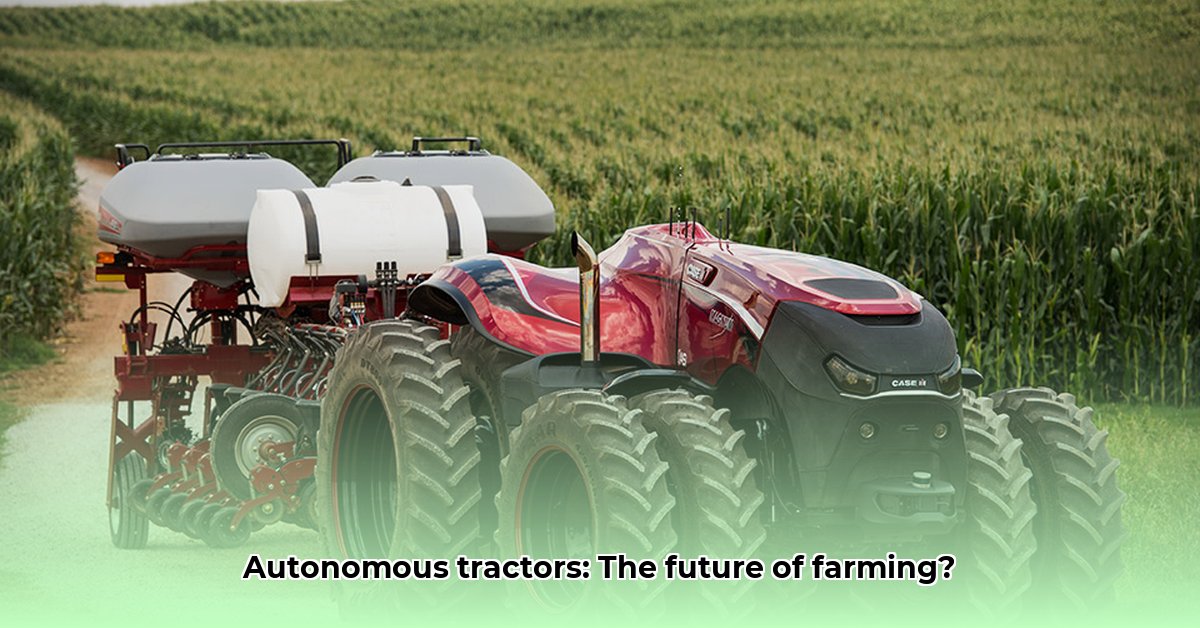
Case IH Autonomous Tractor: A New Era in Farming
The agricultural landscape is undergoing a significant transformation, and Case IH is at the forefront of this revolution. The future of farming is autonomous, a shift driven by technology that promises increased efficiency, reduced costs, and higher yields. This article delves into Case IH's autonomous tractor projects, exploring their capabilities, the substantial benefits they offer, the challenges that need to be overcome, and the implications for the future of agriculture. Learn more about Case IH's legacy with tractors like the Case 585 Tractor.
Case IH's Autonomous Technology: Driving the Future of Farming
Case IH is developing a comprehensive autonomous farming system, not just individual tractors. Two key projects exemplify their commitment: the Trident 5550 autonomous applicator and the Autonomous Concept Tractor. The Trident 5550 focuses on precision chemical application, ensuring optimal fertilizer or pesticide distribution for maximized efficiency and minimized waste. Think of it as a highly accurate sprayer for fields.
The Autonomous Concept Tractor represents a more ambitious undertaking – a fully self-driving tractor capable of performing a wide range of field operations, from planting to harvesting. This is akin to having a tireless, incredibly precise farmhand working 24/7. Both projects utilize cutting-edge technologies: GPS for precise location, LiDAR (light detection and ranging) for creating 3D maps of the environment, radar for long-range object detection, and cameras for visual perception. These technologies work in concert to enable safe and efficient navigation, even in complex field conditions. How much more efficient could your operations become with such technology?
Benefits of Autonomous Tractors: The Upsides of Automation
The advantages of autonomous tractors are multifaceted and significant for farmers. These include:
Reduced Labor Costs: Autonomous tractors can operate continuously, reducing reliance on human labor and associated costs, such as wages and benefits. This is particularly significant given current labor shortages in the agricultural sector.
Fuel Efficiency: Optimized routes and speeds lead to lower fuel consumption, resulting in direct cost savings and a reduced environmental footprint. With fluctuating fuel prices, every drop counts.
Precision Application: Precise application of fertilizers and pesticides minimizes waste, leading to cost savings and environmental benefits. This means using only the necessary amounts, both fiscally responsible and environmentally friendly.
Increased Yields and Improved Quality: Precise planting and harvesting contribute to healthier crops and higher yields. Ultimately, this translates to a greater return on investment.
Enhanced Safety: Automating potentially hazardous tasks reduces the risk of accidents and injuries.
These advantages point to a future where farming is more profitable and sustainable.
Challenges and Limitations: The Road to Full Autonomy
Despite the significant potential, several challenges hinder the widespread adoption of autonomous tractors. These include:
High Initial Investment: The substantial upfront cost can be a barrier for smaller farms or those with limited capital. Innovative financing models are needed to address this.
Technological Limitations: Sensor malfunctions, software errors, and unpredictable field conditions can disrupt operations. Robust redundancy and fail-safe mechanisms are crucial for reliable performance.
Regulatory Uncertainty: Clear legal and regulatory frameworks for autonomous agricultural equipment are still under development, creating uncertainty for manufacturers and farmers alike.
Cybersecurity Risks: Connected tractors are vulnerable to cyberattacks, threatening both data security and operational integrity. Robust cybersecurity measures are essential to mitigate these risks.
Farmer Adoption and Training: Farmers need adequate training and support to effectively integrate this new technology into their operations. Building trust and providing resources are vital for successful adoption.
Addressing these challenges requires a collaborative effort among manufacturers, researchers, policymakers, and farmers.
The Future of Farming: A Collaborative Vision
The future of farming extends beyond individual autonomous tractors. It envisions interconnected systems where multiple autonomous machines coordinate their work across large farms. Data analytics will play a critical role, providing farmers with real-time insights and predictive capabilities for improved decision-making. A successful transition requires a collaborative approach, uniting farmers, manufacturers, researchers, and government agencies. "The future of farming requires a holistic approach, integrating technology with human expertise," states Dr. Emily Carter, Agricultural Technology Expert at the University of California, Davis. This collaborative vision is essential for realizing the full potential of autonomous farming.
Actionable Steps for Farmers: Embracing Autonomous Technology
Farmers considering autonomous technology should take these steps:
Pilot Programs: Participate in pilot programs to assess ROI and gain practical experience before large-scale investment.
Continuous Education: Stay informed about technological advancements through workshops, conferences, and online resources.
Data Integration: Ensure compatibility between existing farm management systems and autonomous machinery data.
Financial Planning: Develop a comprehensive financial plan, exploring financing options and potential government subsidies.
Safety Protocols: Implement thorough safety protocols and provide comprehensive training for all personnel.
Conclusion: A Harvest of Innovation
Case IH's autonomous tractors represent a significant advancement in sustainable agriculture. To fully realize the potential of this technology, we must address the challenges proactively and foster collaboration among all stakeholders. The future of farming is being shaped today, and autonomous tractors are a critical component of this exciting transformation. The path forward requires continued innovation, collaboration, and strategic investment to cultivate a more efficient and sustainable agricultural future.